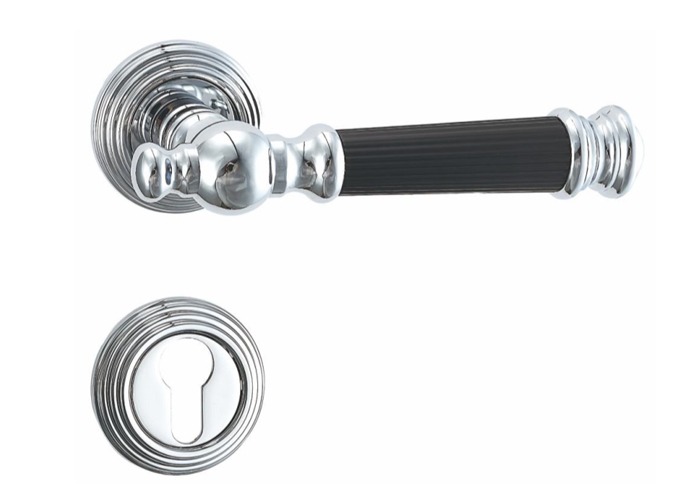
Choosing a door handle supplier comes down to specification fit, compliance evidence, quality control, and total landed cost. The best partner can show detailed test reports, match materials to traffic levels, and prove repeatability. Buyers who chase the lowest unit price usually take the extra cost back later through warranty claims, freight problems, and installation delays. Stainless steel currently dominates 49% of the market exactly because commercial buyers prioritize long-term performance over cheap initial quotes.
Start with a buying brief your supplier can actually quote
A supplier cannot quote responsibly from a reference photo and a vague request for price. When the RFQ does not define the application, dimensions, finish, compliance needs, and volume assumptions, suppliers fill in the blanks themselves. Then the quote is wrong, the sample is wrong, or both. Recent market data put price variations in core components like zinc and brass in the 5% to 15% range, so it helps to lock the material definition before pricing moves again.
A complete architectural hardware RFQ defines the handle and the door assembly, not just the trim.
Minimum technical data every buyer should send before requesting quotes:
- Door material and dimensions. Specify wood, hollow metal, or glass, along with exact door thickness (e.g., 1-3/8″ or 1-3/4″).
- Backset and throw need actual numbers, including 2-3/4″ backset and latchbolt throw lengths (minimum 1/2″ for bored locks, 3/4″ for mortise locks).
- Use recognized BHMA codes, such as LV9050T for an office function or LV9080T for a storeroom function.
- If accessibility requirements apply, state them early, including a maximum 5 lbf opening force for interior hinged doors.
- Finish codes matter more than subjective color names if you want batch consistency.
Door Handle RFQ Checklist
| Category | RFQ Field Requirement | Why It Matters |
|---|---|---|
| Physical Spec | Spindle size, backplate dimensions, handing | Prevents installation mismatch on the job site. |
| Material | Base material grade (e.g., 304 vs 316 Stainless) | Determines corrosion resistance and structural strength. |
| Performance | Required cycle tests or target application | Ensures the internal spring mechanism matches traffic volume. |
| Logistics | Packaging type, required labeling, carton size | Impacts shipping density and total landed cost. |
Match handle construction to the jobsite, not the showroom
The operating environment decides the handle material. A polished sample does not.
Suppliers can offer products that look nearly identical and are made from completely different base metals. Pick the wrong one and the problems show up fast: sagging levers, chipped finishes, return springs that do not come back cleanly. High-grade stainless steel is still the default for heavy commercial and exterior applications. According to ANSI and BHMA durability testing, high-grade stainless steel hardware withstands over one million operation cycles without deformation. Zinc alloy is a cost-effective option for moderate-traffic interiors, especially where intricate shapes and plated finishes matter. Brass gives a premium, heavy feel and has natural antimicrobial properties, but it will tarnish over time unless protected by advanced Physical Vapor Deposition (PVD) coatings. Aluminum is the lightest option, offering high corrosion resistance for coastal environments, but it scratches and dents more easily in high-abuse zones.
Material vs Use Case vs Risk
| Material | Primary Use Case | Primary Risk |
|---|---|---|
| Stainless Steel (304/316) | High-traffic commercial, hospitals, exterior | Higher unit cost; limited intricate design options. |
| Zinc Alloy | Residential, hospitality, budget commercial | Weaker corrosion resistance; internal mechanism wear. |
| Solid Brass | Luxury residential, high-end hospitality | Heavy; requires maintenance or PVD coating to prevent tarnish. |
| Aluminum | Light residential, interior coastal applications | Vulnerable to scratching, denting, and impact damage. |
A capable factory leaves fingerprints long before production
Catalogs are almost useless here.
A buyer learns more from process control than from a polished product sheet. Plenty of suppliers calling themselves direct manufacturers still outsource CNC machining, investment casting, or surface finishing, and once that happens the real lead time and the real quality variation are sitting somewhere else. A mature supplier should have a documented Quality Management System (QMS), usually aligned with ISO 9001 standards, and that matters more to me than a broad catalog. I still overweight process ownership when I score suppliers, even though a disciplined supplier can outsource well. Old habit, not entirely justified. I want to see an independent Quality Control (QC) team separated from production staff, I want to see Incoming Quality Control (IQC), and I want to know whether material tracing is something they actually use or something they say because buyers expect to hear it. If a supplier is smooth on OTIF and vague on IQC, I stop listening. A factory that says it can machine, cast, polish, plate, assemble, inspect, rework, and pack everything under one roof may still be stretching the truth, but at least then you know which person and which log you need to ask about when the sample feels a little off and nobody wants to own it.
The simple floor checks still matter. An auditor can perform a magnet test on the factory floor: a magnet should not stick to 304-grade stainless steel components. If it does, the factory accepted a lower-grade ferrous alloy from its raw material supplier. And if a supplier cannot produce raw material certificates or trace a finished handle back to a specific batch, the rest of the presentation tends to matter less.
Factory Audit Checklist
- IQC records: Does the factory verify raw material composition upon receipt?
- Process ownership: Which operations are in-house (e.g., die-casting, manual polishing, PVD coating) versus outsourced?
- Document control: Are Standard Operating Procedures (SOPs) and calibration logs visible on the shop floor?
- Traceability: Can the supplier trace a finished handle back to a specific batch of raw material?
Red flags during supplier evaluation:
- Raw material certificates are missing.
- Production managers handling final quality inspections instead of an independent QC team.
- Identical product photos shared across multiple “competitor” factory websites.
Compliance has to match the market, not just the product
A compliant door handle supplier can document market-specific fit before production begins. A CE mark or a general performance certificate does not help much if it does not cover the full door assembly, fire ratings, or the accessibility rules in the destination market.
In the European market, BS EN 1906 classifies door furniture using a strict 8-digit coding system. Buyers need the classification code, not a loose “EN1906 tested” claim. Digit 1 defines the category of use: Grade 1 covers medium-frequency internal residential doors, while Grade 4 applies to high-frequency doors subject to frequent violent use, such as football stadiums, barracks, and public toilets. Digit 2 is durability, and a Grade 7 rating requires the handle to pass 200,000 operation cycles. Digit 5 addresses safety applications; Grade 1 safety requires the handle-to-plate connection to withstand a person grabbing it to prevent a fall.
Target Market vs Compliance Documents
| Target Market | Primary Standards / Documents to Verify |
|---|---|
| United States | ANSI/BHMA A156.2 (Bored) or A156.13 (Mortise); ADA 5 lbf opening force limits. |
| Europe / UK | BS EN 1906 (8-digit code); CE/UKCA marking; EN 1634 (Fire Resistance). |
| Australia | AS/NZS compliance testing; specific disability access dimension codes. |
Documents to request before sample approval:
- Third-party cycle test reports, with the exact number of cycles passed.
- Fire door compatibility certificates (e.g., EN 1634).
- Material composition certificates.
Samples should prove fit, feel, and finish before you discuss scale
A sample review that focuses on weight and polish is not much of a review. The useful checks are fit, spring action, coating adhesion, and resistance to environmental decay. That is where field failures usually start.
Corrosion resistance needs actual verification through a salt spray test under ASTM B117 or ISO 9227. In that setup, handles sit in a sealed chamber exposed to a 5% sodium chloride mist at a constant 35°C (95°F). The duration is the part buyers should pay attention to. A standard zinc-plated steel handle with yellow passivation generally requires 96 hours of exposure to prove basic indoor durability. Door handles installed in commercial bathrooms require a minimum of 240 hours. For coastal or heavy industrial environments, 316 stainless steel handles must withstand 480 to 1,000 hours of continuous salt spray exposure without showing white rust or pitting.
Sample Evaluation Scorecard Template
| Test Category | Evaluation Metric | Minimum Passing Standard |
|---|---|---|
| Dimensional Fit | Tolerance check against CAD drawing. | +/- 0.5mm on backplate and spindle. |
| Return Spring | Lever returns to exact horizontal position. | Zero sag after 50 manual depressions. |
| Corrosion | Salt spray test (ASTM B117). | 96 hours (indoor) / 480 hours (exterior). |
| Finish Integrity | Cross-hatch adhesion test on plated parts. | Zero flaking or peeling of PVD/electroplate. |
Supplier sample submission requirements:
- Include one “aesthetic” sample for client approval.
- Two “production-grade” samples for destructive testing.
- Submit samples in the exact packaging proposed for mass production to test transit protection.
Unit price is only half the number that matters
The cheapest quote often turns into the most expensive order once freight, defects, rework, and warranty exposure are counted. Comparing one supplier’s EXW (Ex-Works) factory price against another supplier’s FOB (Free On Board) quote, or against a local retail price, still trips buyers up all the time.
Total Landed Cost (TLC) is the only financial number that lets you compare suppliers cleanly. Sourcing architectural hardware directly from manufacturing hubs can reduce material costs by 30% to 50% compared to local distribution, but only if the logistics are under control. TLC includes inland transport to the departure port, export customs clearance, ocean freight, marine insurance, and import duties. In some markets, regional trade agreements, anti-dumping duties, and Section 301 tariffs can swing the math hard enough that a cheap unit price stops looking cheap. Port handling fees and domestic cartage to the final warehouse finish the calculation.
Total Landed Cost Worksheet
| Cost Component | Impact on Total Budget | Key Variables |
|---|---|---|
| Unit EXW Price | 60% – 70% | Material grade, handle weight, finish type. |
| Logistics & Freight | 10% – 15% | FCL vs LCL utilization, port origin, fuel surcharges. |
| Tariffs & Duties | 5% – 25% | Destination country, HS code, anti-dumping rules. |
| Compliance & QC | 2% – 5% | Third-party inspection (e.g., SGS), salt spray testing. |
Total Cost Formula:Total Landed Cost per Unit = (Total Invoice + Freight + Duties + QA Fees + Packaging) / Number of Accepted Defect-Free Units
Lead time promises break where process control is weak
Lead times usually fail for familiar reasons: raw material slips, finishing bottlenecks, or outsourced coating queues. A stated four-week promise means very little if the supplier cannot show how it absorbs those delays.
With global door handle shipments surpassing 2.5 billion units annually, manufacturing lines are crowded. Custom or commercial-grade hardware often slows down at surface treatment, and if electroplating or powder coating is outsourced, batches wait. A standard sea freight journey from Asia to Western markets adds an additional 6 to 8 weeks. Ask for On-Time In-Full (OTIF) delivery metrics and weekly production visibility. That part is not glamorous, but it is usually where the schedule goes.
Lead-Time Promise vs Evidence to Request
| Supplier Claim | Verification Evidence Required |
|---|---|
| “We hold raw material stock.” | Photos of raw material warehouse; IQC logs. |
| “Finishing takes 5 days.” | Confirmation of in-house PVD/electroplating vs outsourced. |
| “30-day production lead time.” | Weekly production schedule updates; WIP (Work In Progress) photos. |
Good commercial terms protect the second order, not just the first
This part gets treated like paperwork until replacement parts become a problem.
Failing to negotiate tooling ownership, spare part availability, and price review rules upfront leaves the buyer exposed later. Custom door handles require unique extrusion dies or casting molds, and every custom profile carries an upfront tooling fee. Buyers should establish a Die Cost Recovery Program so the tooling deposit is progressively refunded from purchase invoices once the buyer reaches an agreed cumulative order volume within 24 months. Even after full recovery, the physical die must remain the buyer’s exclusive property.
Commercial Terms Checklist before issuing a PO:
- Tooling ownership: Contract states the buyer owns all custom molds and dies.
- Cost recovery: Clear tonnage or unit threshold for mold fee refunds.
- Spare parts policy: Guarantee of matching replacement springs, spindles, and screws for at least 5 years.
- Warranty claims: Defined SLA for replacing units that fail cycle or corrosion tests in the field.
Choose with a weighted scorecard, then test with a controlled first PO
The best door handle supplier is the one that scores highest on fit, evidence, and repeatability, not the one with the best sales pitch. A weighted scorecard is useful because it forces buyers to compare like with like.
A strong scorecard puts the heaviest weight on things a supplier can prove. Engineering fit and compliance confidence should sit near the top. For projects that may need electronic integration later, future capability matters too: smart handle unit sales reached 375 million in 2024, and suppliers that can combine mechanical durability with electronic access control score higher on capability. After selecting the top supplier, test the decision with a limited pilot order rather than assuming the quote stage told you everything.
Supplier Scorecard Weighting Example:
- Quality & Engineering Fit (30%): Passes salt spray tests; zero sag on return spring; exact dimensional match.
- Compliance & Certifications (25%): Provides EN1906, ANSI/BHMA, and fire-door test reports.
- Total Landed Cost (20%): Competitive pricing after freight, duties, and tooling recovery.
- Capacity & Process Control (15%): In-house finishing; ISO 9001 QMS; strong OTIF history.
- Communication & Risk (10%): Rapid RFQ response; clear English technical support.
First-Order Pilot KPIs:
- Defect rate: Less than 1% visual or mechanical rejections on incoming inspection.
- OTIF delivery: Shipment leaves the port on the exact date promised in the PO.
- Sample match: Bulk order finish and spring tension perfectly match the signed pre-production sample.
Frequently Asked Questions
1. What is the most important factor when choosing a door handle supplier?
The most important factor is the supplier’s ability to prove compliance with target market standards such as EN1906 or ANSI/BHMA and to optimize Total Landed Cost, rather than simply offering the lowest Ex-Works unit price.
2. Should I buy from a door handle manufacturer or a trading company?
Usually, the manufacturer. A trading company works if you need to consolidate hundreds of different SKUs across multiple hardware categories into a single shipment.
3. What documents should a door handle supplier provide before I place a bulk order?
Request third-party cycle test reports, salt spray corrosion test results (ASTM B117 or ISO 9227), raw material certificates proving the metal grade, and compliance documentation specific to your region, such as fire rating certificates.
4. How do I compare two door handle quotes if one is much cheaper?
Put both quotes on the same commercial basis first. EXW against FOB is not a real comparison, and neither is a factory quote against a local retail price. Then work through packaging, third-party inspection fees, freight assumptions, duties, tooling recovery, base metal, and defect exposure. The cheaper quote often looks cheaper because something material has been left out, whether that is packaging, inspection, or the metal itself. If one supplier is quoting hollow zinc and the other is quoting solid stainless steel, those are not two prices for the same handle.
5. Which door handle material is best for commercial or high-traffic use?
Grade 304 or 316 stainless steel is usually the best option for commercial environments. High-grade stainless steel hardware withstands over one million operation cycles in durability testing and offers strong corrosion resistance.
6. How many samples or tests should I require before approving production?
At least two rounds: one visual sample for finish and ergonomics, then a production-grade sample for destructive cycle testing and salt spray verification. Also ask for the proposed bulk packaging.